Can You Refuse Field Sobriety Tests in Florida?
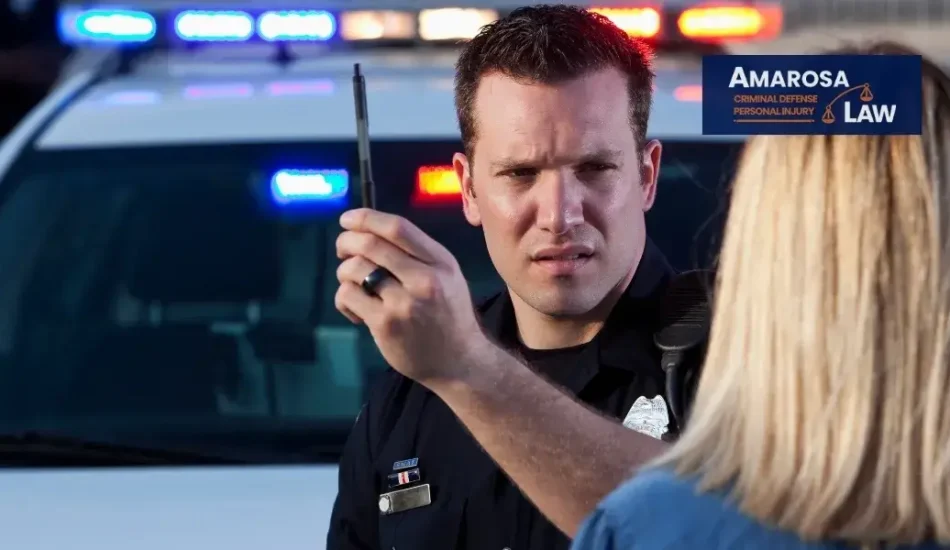
Many people are aware of Florida’s implied consent law, which requires you to submit to chemical tests after an arrest for driving under the influence (DUI). Refusing the chemical test can lead to immediate license suspension and other penalties. Because of this, drivers wonder: can you refuse field sobriety tests in Florida? These concerns can be particularly important in cases involving Multiple DUI or Underage DUI.
You are able to refuse field sobriety tests, and you won’t immediately lose your license for doing so. However, refusing does not prevent you from being arrested. It’s important to understand these tests and whether or not you should take them if you are pulled over.
What Are Field Sobriety Tests?
In Florida, field sobriety tests are tests an officer gives you after pulling you over to determine if you are sober. The most common tests used are:
- The horizontal gaze nystagmus test, where you follow the motion of a light or object to determine if you have irregular eye movements.
- The one-leg stand test, which determines your balance, and may also include counting to determine your level of mental impairment.
- The walk-and-turn test, where you walk in a straight line in one direction and then turn and walk the same path.
There may be other tests, but these are the most standard ones. They are meant to assess your mental and physical capabilities. However, they are also vulnerable to misinterpretation, outside conditions, and poor administration, which can make them inaccurate.
In Florida in 2025, there were 4,730 vehicle crashes involving alcohol, leading to 2,761 injuries and 292 fatalities. There were also 265 crashes involving both alcohol and drugs, and 445 crashes involving only drugs. The same year, there were 9,557 arrests for DUI unlawful blood alcohol in the state. Drug-related cases may involve Drug Crime or Drug Trafficking.
Can You Refuse These Tests?
You are legally able to refuse field sobriety tests if you are pulled over in Florida. These tests do not qualify for the implied consent laws, so you do not face immediate penalties like license suspension or later consequences like increased criminal penalties.
You have the right to politely refuse the tests, but that doesn’t prevent you from receiving any consequences. Whether you agree to take the field sobriety tests or not, the officer who pulled you over may determine there is sufficient evidence of impairment and arrest you.
If you take the tests, the officer may use the results of those tests as evidence to arrest you, even if you are sober. If you don’t take the tests, the officer might use other evidence to arrest you, such as erratic driving, red eyes, or even the fact that you refused the tests, in some cases. Because of this, it can be hard to determine what the right option is if you are pulled over on DUI suspicion.
Field Sobriety Tests Can Be Unreliable
Field sobriety tests can be influenced by many outside factors, and the results are often determined by the officer’s subjective opinion. This often makes them a tool for finding reasonable suspicion based on an existing bias. The tests can be influenced by many factors, including:
- Stress and nervousness. The stress of being pulled over can cause you to make mistakes, mishear instructions, or even shake, making you appear intoxicated.
- Medical and health conditions. Certain health conditions can make field sobriety tests difficult or impossible, like joint issues, neurological conditions, chronic pain, and physical disabilities.
- Improper administration. These tests have to be administered in a set way by an officer. If the instructions are not clear, or other improper administration occurs, this can make you appear impaired.
- Officer bias. If the officer who pulled you over has already decided that you are impaired, the field sobriety tests can create information that supports that suspicion, regardless of your actual impairment.
- Road and environmental conditions. The tests can be influenced by uneven roads, insufficient lighting, loud traffic, rain, wind, and other exterior factors.
There are options to challenge field sobriety tests after an arrest during your case if there were outside factors. It’s important to get legal representation to help build your case, whether you submitted to a field sobriety test or not before an arrest.
FAQs
What Happens if I Deny a Field Sobriety Test in Florida?
If you deny a field sobriety test in Florida, the police officer may arrest you for a DUI based on other evidence of probable cause, such as slurred speech or the smell of alcohol. However, there are no direct legal penalties for refusing a field sobriety test, which is often subjective and can be used against you even if you were sober.
Should I Refuse a Field Sobriety Test if I am Sober?
It can be in your interest to refuse a field sobriety test if you are sober, as a law enforcement officer can interpret intoxication because of poor coordination, medical conditions, and other issues.
Refusing the tests can prevent these interpretations from being used as evidence of impairment. However, refusing them can also lead to an arrest.
Is a DUI a Felony in Florida in 2026?
A DUI in Florida in 2026 is generally a misdemeanor when there are no aggravating factors. A DUI becomes a felony if you have three, four, or more prior violations of the offense, or if you caused serious bodily injury to another person. A felony is also charged in hit-and-run cases involving death or another felony.
Should You Hire a DUI Lawyer After an Arrest?
Yes, you should hire a DUI lawyer after an arrest, whether or not you agreed to field sobriety tests. An attorney helps protect you if the field sobriety tests were administered improperly or misinterpreted. They can also help you build a defense for lack of probable cause for an arrest, or build another defense. An attorney helps you protect your rights and interests during the arrest process and helps you understand what options are available to you.
Work With an Experienced Florida DUI Attorney
If you were arrested for a DUI, it’s important to get an experienced defense attorney. An attorney can explain your rights and help you build a defense. Whether you agreed to field sobriety tests or not, your legal defense can assess your options in courts like the Circuit Criminal Court for Hillsborough County. Related criminal matters may include Criminal Defense, Arson, Assault, Burglary, Child Pornography, College and Student Crimes, or Domestic Violence. Contact the Amarosa Law Firm P.A. today for a compassionate, fierce, and highly experienced defense team.

© Copyright 2026 Amarosa Law Firm P.A. All rights reserved.
Digital Marketing By 
*Images are obtained under license from Canva and other third-party stock image providers, with attribution included where required.