Tampa city experienced a record low in homicides, with the Tampa Bay Times reporting that 19 murders occurred in 2025, which was down 44% from 2024. Nationally, the FBI reported that, on average, a murder occurred every 31.1 minutes across the United States in 2024. Crime statistics like these help illustrate how homicide trends are tracked at both the local and national levels through law enforcement reporting systems.
Homicide vs Murder vs Manslaughter in Tampa
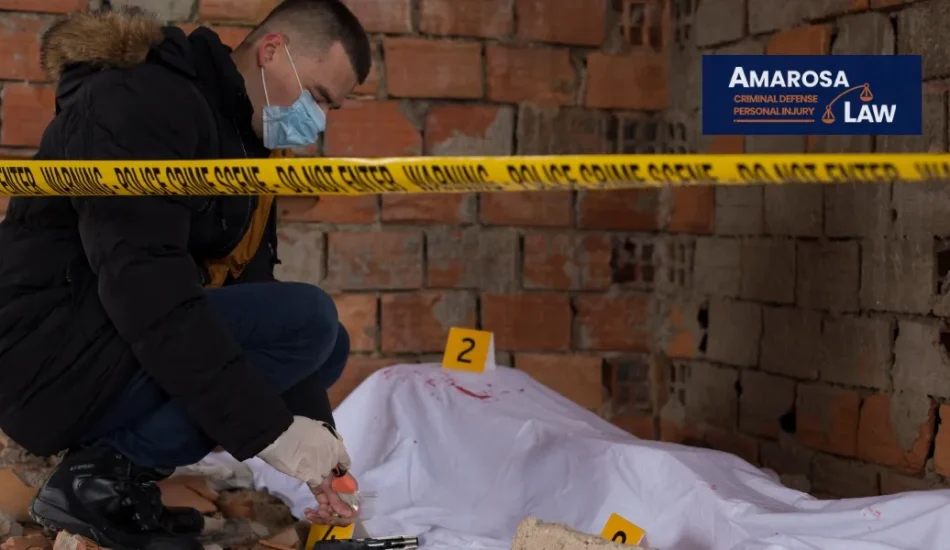
Facing a serious criminal charge under Florida law can leave you with many questions about what that charge actually means. For those in Tampa who have been charged with homicide, it is important to understand the differences between homicide vs murder vs manslaughter in Tampa.
While these terms may be used interchangeably in casual conversation, the state of Florida defines each of these crimes differently, based on varying circumstances and elements of the crime. Each category of killing contains elements that police officers and prosecutors look for when examining a criminal case. Reviewing how Florida law differentiates can help you better understand how your case might be approached.
What Is the Legal Definition of Homicide in Florida?
Under Florida law, homicide is a broad legal term used when one person causes the death of another. Florida recognizes different types of homicide offenses, which include murder and manslaughter. Florida Statutes Chapter 782 defines homicide offenses. Sections 782.04 and 782.07 address murder and manslaughter, respectively.
These statutes establish the legal elements prosecutors consider when determining how to charge a homicide offense. Depending on intent, circumstances, and evidence obtained during a criminal investigation, law enforcement can charge someone with either murder or manslaughter.
How Florida Law Distinguishes Murder From Manslaughter
Murder and manslaughter are differentiated by Florida laws based on the legal elements that the authorities claim to support the allegation. Murder charges are typically filed in cases where the circumstances surrounding the alleged offense indicate intent or actions that support a murder charge.
Manslaughter is usually alleged in cases where authorities claim that a death occurred, but do not have evidence of the legal elements needed to support a murder charge, such as intent. These definitions are set forth in Florida statutes, as well as interpreted by court decisions through the years. Analysis of the circumstances of each case is usually required to determine which, if either, of these charges may apply.
Why Legal Terminology Matters in Criminal Cases
The terms homicide, murder, and manslaughter all have specific meanings under Florida law. These definitions will impact how investigators and prosecutors handle a criminal case, as well as how a court looks at the evidence and arguments presented during trial.
If you are facing homicide charges, it is helpful to understand how familiar terms may be defined under the law. By learning more about these differences, you can become more familiar with the legal system and how criminal charges are applied.
How Criminal Courts Review Homicide Allegations in Tampa
Felony criminal charges brought in Tampa will usually be processed through the Thirteenth Judicial Circuit Court of Florida, which serves Hillsborough County. As this court has local jurisdiction for felony criminal charges in Tampa, they operate under Florida criminal procedure, which refers to how a criminal case will flow through the court system.
This includes court hearings, evidence review, and other processes that take place during the progression of a case. By learning about where criminal cases are heard and how court procedure works in your area, you can become more comfortable with the process here in Hillsborough County.
Hire a Homicide Lawyer
At Amarosa Law Firm P.A., we represent individuals across Florida and in federal district courts who are facing serious criminal charges like homicide. Our firm regularly assists clients in the Tampa area and throughout Hillsborough County, with our office located on Henderson Boulevard here in Tampa.
Our lead attorney is a former professor of criminal justice, crime scene evidence, and DNA, bringing extensive knowledge of investigative procedures and evidence analysis to complex criminal cases. We offer consultations to allow individuals to discuss their situation privately and learn how our defense team may assist.
FAQs
Contact a Tampa Homicide Lawyer
To understand Florida homicide, murder, and manslaughter laws, you should learn about the differences among them. Homicide, as a general term, refers to the killing of a human being by another human being. Murder and manslaughter are two forms of homicide.
At Amarosa Law Firm P.A., we handle serious criminal charges for people across Tampa and other cities in Florida. We can assess your situation, explain your options, and guide you in making informed decisions about your case. Schedule a free, no-obligation consultation to discuss your case and hire a homicide lawyer today.

© Copyright 2026 Amarosa Law Firm P.A. All rights reserved.
Digital Marketing By 