Florida Open Carry Law: Do You Need a Permit?
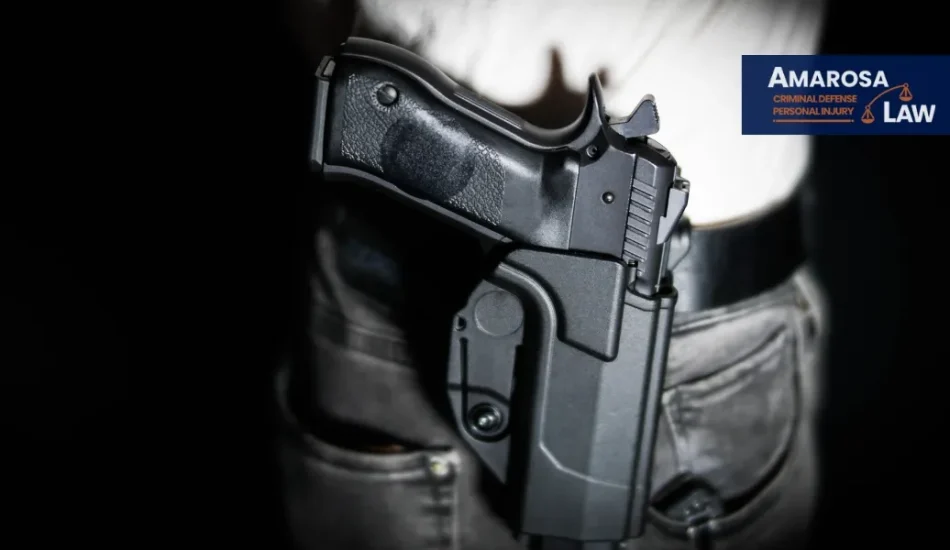
On September 26, 2025, the Open Carry of Firearms was made legal in Florida in an appeals court decision upheld by the Attorney General. The new Florida Open Carry Law, however, is still under review and could be reviewed by the Florida Supreme Court.
It’s important to be responsible and understand that open carry comes with some stipulations, and that the laws may be subject to change in the future.
Understanding the Changes to Florida’s Open Carry Laws
Florida had a ban on open carry for decades. However, a Florida appeals court, the First District Court of Appeal, struck down Florida’s open carry ban on Sept. 10, 2025, ruling that the law violated citizens’ rights under the Second Amendment.
This was decided in the case McDaniels v. State. In 2022, a man with a concealed carry permit was openly carrying a handgun. His firearm was confiscated, and he was later arrested. The county court convicted him of violating the Florida open carry ban, which he then appealed.
After the appeals court decision, the state’s AG confirmed the decision applied statewide. You do not need a license to openly carry a firearm in Florida, as long as you are 21 or older, legally allowed to possess a firearm, and are not in a prohibited location.
While open carry is treated as legal, all gun owners should remain aware of the case in the court. The end of the open-carry ban is a district court’s rejection of state law that has existed for almost 40 years, and higher courts may challenge the decisions made by the district court. Although the AG upheld the decision, this may not be permanent. While you are currently able to open carry legally, with some restrictions, this could change in the future.
Who Can Open Carry in Florida?
You are able to open carry in Florida as a law-abiding citizen with the legal ability to possess a firearm. If you are prohibited from possessing a firearm, you are not able to open carry. It’s important to be aware of the restrictions for purchasing, possessing, and carrying a firearm to avoid Florida open carry law violations and potential criminal consequences.
What Else Should I Know About Open Carry in Florida?
Some key information about the current open carry law in Florida includes:
No License Required
You can openly carry a firearm in Florida without a concealed weapon license.
Eligibility
You must be eligible to possess a firearm to open carry that firearm.
While adults 18 to 20 years old were traditionally banned from carrying a firearm, a ruling by the Fourth District Court of Appeal in Florida lifted this ban on June 17, 2026. Those 18- to 20-year-olds are still prohibited from purchasing a firearm, but those who obtain a firearm are able to open carry. These individuals may receive a firearm through gift or inheritance.
You meet the other legal requirements to possess a firearm. You are able to purchase and possess a firearm in Florida if:
- You are 21 years of age or older, or you are 18 years of age or older and a law enforcement officer, correctional officer, or service member.
- You are a resident of Florida when buying a handgun, or you are a resident of a state where the firearm purchase is legal for long guns.
- If you are a legal permanent resident alien, you have a valid registration number.
- If you are a non-resident alien, you have a border crossing number and an exception document.
- You must complete the required background check.
- You must complete the three-day waiting period between purchasing the firearm and receiving it. Some jurisdictions have longer waiting periods.
You are not required to have a permit for purchasing a firearm. There is also no limit to how many firearms you can obtain in one transaction.
You are prohibited from purchasing or possessing a firearm if you are:
- A felon
- Under indictment for a felony
- Convicted of a domestic violence misdemeanor
- A fugitive from justice
- An illegal alien
- Dishonorably discharged from the Armed Forces
- An unlawful user of a controlled substance
- Legally considered mentally defective
- Committed involuntarily
- An individual who renounced U.S. citizenship
- Someone with an active protection order against you
There are also further restrictions under Florida law, such as adjudication of a crime as a delinquent that is felony-equivalent.
Prohibited Locations
You cannot open carry in all locations. You are prohibited from open carrying in certain places considered sensitive. The laws in Florida specifically outline fifteen locations where open carry is not allowed, and licensure does not allow someone to openly carry or conceal carry into:
- A place of nuisance, including a place of prostitution or any location where state law is violated
- A sheriff, police, or highway patrol station
- A prison, jail, or detention facility
- A courthouse
- A courtroom, although a judge has final say on who can carry a concealed weapon and can carry a concealed weapon themselves
- A polling place
- A county, public school district, municipality, or special district meeting
- A Legislature or a committee meeting
- An event for school or college, or a professional athletic event that is unrelated to firearms
- A school facility or administration building for elementary or secondary education
- A career center
- The area of an alcohol-licensed establishment, in the portion of the establishment that is primarily devoted to such purpose
- A college or university facility, although there are exceptions for stun guns, nonlethal electric weapons, and devices designed solely for defensive purposes when the weapon does not fire a dart or projectile, if the licensee is a registered student, employee, or faculty member of such college or university
- An airport passenger terminal and sterile area, although a legal firearm that is packed for shipment and prepared as baggage is not prohibited for lawful transport
- A place where it is prohibited to carry firearms by federal law
It’s important to be aware of the restrictions on where you can openly carry firearms to avoid charges.
Private Property
The law for legal open carry only applies to public property. Private property owners can prohibit firearms on their property, and you must comply with their requests. This includes businesses, employers, and other private property owners. Gun owners should be aware that the ruling does not extend to every establishment.
Who Can Be Arrested for Open Carry in Florida?
Based on these restrictions, you can be arrested for open carry in Florida if:
- You are prohibited from possessing a firearm
- You were carrying in a prohibited location
- You were carrying the firearm improperly
- You were threateningly carrying the firearm
In 2020, the Florida Department of Law Enforcement reported 7,508 arrests for weapons violations.
What Should You Do If You Are Charged With a Firearms Offense in Tampa?
It can be frustrating and stressful to be charged with a firearm offense in Tampa, whether it is a violation of open carry laws or aggravated assault with a firearm. It’s important to take certain steps to protect your legal rights and your future:
- Protect your rights. You have the right to remain silent and the right to legal representation. Invoke both of these rights and do not say anything to law enforcement. Statements can be used against you. Even if you think you can explain yourself, don’t.
- Do not escalate. Be calm and cooperate with law enforcement, rather than resisting.
- Document the situation. It can be helpful to retain evidence of the arrest and detainment, including information about officers, witnesses, and more. This information can be useful in your defense.
- Do not discuss the case. Don’t talk about the alleged offense or case with friends or family, and don’t post anything online. These statements could also be used against you. Only discuss your case and offense with your legal defense.
- Get an attorney. You want an experienced Tampa criminal defense lawyer on your side. They can listen to your situation and determine the ideal method to potentially avoid charges and protect your rights. It’s important to get an attorney as soon as possible after an arrest or charge. The sooner you work with an attorney, the sooner they can begin working to prevent an arrest, charges, or a conviction.
If you are charged with an offense, your attorney can continue to protect your rights and assess what options you have to minimize or avoid the penalties of a conviction.
Potential Defenses Against Firearm Offenses
The right defense for your gun crime will depend on the specific offense and the circumstances of your charges and arrest. A defense strategy might include:
- Lack of knowledge that a firearm was present
- Lack of actual or constructive possession
- An illegal search and seizure was conducted
- Other rights were violated during an arrest
- You were acting in self-defense or defense of others
- Florida’s Stand Your Ground Law
An attorney can help you review these defenses. If the prosecution cannot meet its burden of proof, you cannot be convicted of a criminal offense. An attorney’s goal is to build a defense that prevents the prosecution from meeting that burden of proof, through suppressing evidence and finding other holes in the case.
Hire an Honest Gun Crime Lawyer at Amarosa Law Firm P.A.
After this change in Florida law, there are now 47 states that allow open carry in some form. However, because this decision is so new, Floridians have to be aware of any changes made to avoid committing weapons violations.
If you are charged with a weapons violation or other firearm offense, you need to hire a gun crime lawyer. If your rights are ever in jeopardy, call the Amarosa Law Firm P.A. to discuss your issues or concerns. We are here to help. Our firm offers free, no-obligation consultations for any criminal offense, and we are available around the clock.

© Copyright 2026 Amarosa Law Firm P.A. All rights reserved.
Digital Marketing By 
*Images are obtained under license from Canva and other third-party stock image providers, with attribution included where required.