What Happens After an Arrest in Florida?
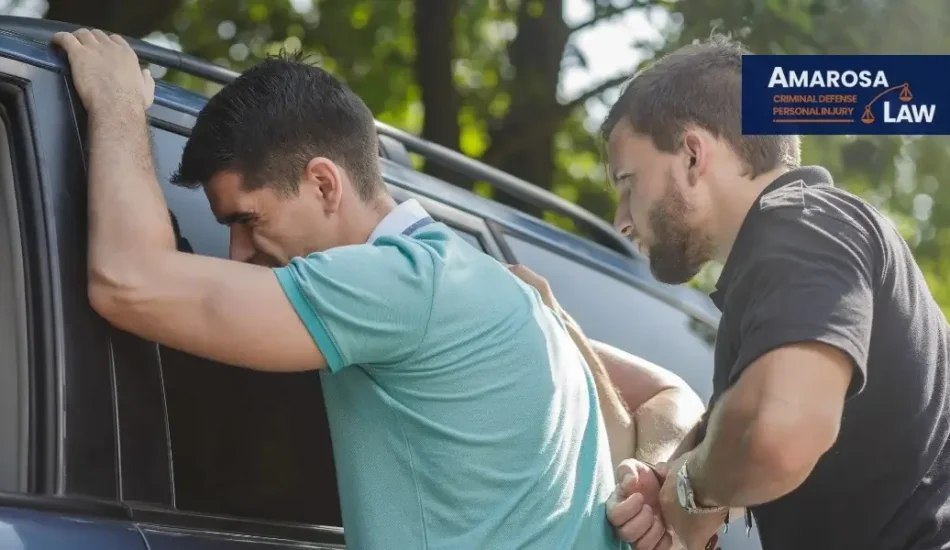
Unfortunately, anyone can be charged with a crime if the state believes with reasonable certainty that you were the one who committed the offense. Any criminal defense attorney will tell you that anyone can be arrested. That’s why it’s important for anyone to know: What happens after an arrest in Florida? If you have been arrested and placed into custody, you should understand the process that follows and what you can do to protect yourself.
Ask Law Enforcement for a Lawyer – Call Attorney Amarosa
If you’ve been arrested because of probable cause or because the police are investigating a crime and want to talk to you, you have an affirmative right to ask for a lawyer. The United States Constitution, specifically the Fifth Amendment, gives you the right to remain silent. Your right to legal counsel is provided through the Sixth Amendment.
Having a lawyer present shouldn’t present any sort of an issue. Talking to the police without a lawyer won’t change how you’ll be treated if the police suspect you have committed a crime. However, if you waive your rights and agree to speak with law enforcement, the things that you say or possibly confess to could come back and be used against you. It is always better to protect your interests and rights with a criminal defense lawyer, regardless of whether you committed a crime or not.
It can be hard to assert your rights when you’re in police custody, and don’t give in. Police may appear to promise things will go better if you just answer their questions. This is not the case. Law enforcement will use any information you give to charge you for a crime. You should invoke your right to silence and an attorney.
Do know that once you’ve asked to talk to a lawyer, you shouldn’t be questioned again. You should not volunteer any further information until your lawyer arrives.
Procedures after Arrest
The procedures immediately after an arrest include:
1. Booking
Once arrested and taken to booking at the police station or jail, your fingerprints will be taken, and you will be photographed. In the booking process, your identity will be verified, you will be subject to a search, and you will have to give up personal items. This process can take several hours.
If you have a bond, you will be told, and someone can post your bond in order to be released. If you cannot post a bond or do not have a bond, then you remain in custody. You will be placed in holding and wait until you’re taken before a judge or magistrate.
2. First Appearance
First appearance court is where the judge will advise you of your formal charges and determine if there was a legal basis for your arrest. This appearance must occur within 24 hours of your initial arrest.
The judge at the first appearance may also request an initial plea, such as guilty or not guilty. If you are not sure how to respond, either state you are not guilty or remain silent. There will be other information at the first appearance, including your right to remain silent, your right to counsel, and your right to communicate with your counsel, family, and friends.
Another issue that might come up will be bail or bond issues. The judge determines the conditions for your release based on whether you are considered a flight risk or a danger to the community. The judge may set bond or provide supervised release or release on recognizance. There may be other limitations for your release, such as a no-contact order or GPS monitoring.
If you don’t have a lawyer yet, the judge will decide whether to appoint a lawyer to represent you. You have the right to legal counsel, and working with an attorney at this stage is in your interests. An attorney can advocate for your rights and potentially help you be released on better terms or be released at all.
A first appearance is not a trial, and no guilt or innocence is determined in Florida.
3. Bail and Bond
Bail and bond procedures are governed by state law. Generally, bail means you’re depositing a certain amount of money or pledging property to ensure you’ll return to court.
If you don’t have access to funds or property, you may use the services of a bail bondsman. The bondsman posts a bond with the court, promising your return. You’re charged a portion of the full bail amount.
If you do not show up in court, the individual who posted your bond, “the bondsman”, owes the court the full amount of the bail. They will be looking to collect that lost amount from you or those who put up assets to help you.
Formal Charges
After your first appearance, you may or may not face actual criminal charges. The prosecution will assess your arrest and the facts of the case to determine if formal charges will be made or not. If you were not granted any form of release after your arrest, formal charges usually must be made 30 days after your arrest. Otherwise, you must be released. The time limits the prosecution has to file charges are different if you were released.
Arraignment Court Date
Once you are formally charged with a crime, you will receive a court date for an arraignment hearing. The purpose of the arraignment is to have the charges read to you and for you to enter a plea.
At this stage of the case, you are not presenting any facts or defenses; you will simply state whether you are pleading NOT GUILTY or GUILTY. In some cases, you can plead NO CONTEST. If you plead guilty, the process ends, and you will be sentenced for the offense.
You have the right to be present at the arraignment, and to have your lawyer there to represent you. You should always assess your plea options with an experienced attorney. Attorney Amarosa can help explain both the charges and the plea you’ll enter.
Plea Bargains or Trial
As your case moves through the system, there will be a point where you may be offered a plea bargain from the prosecutor, or your case needs to go to trial. Actions you take from the moment you’re arrested can affect how your case will turn out.
Having an attorney at the onset of your case is paramount. Your attorney will be able to counsel you on the strength of the state’s case and assist you in making an informed decision on whether to accept the plea agreement or take your case to the jury.
Arrests in Florida and Tampa
There were a total of 543,138 arrests in Florida in 2021. This included 25,848 arrests for aggravated assault, 76,711 simple assault arrests, 78,437 drug arrests, and 33,750 driving under the influence arrests.
There were 32,519 arrests reported in Hillsborough County. For arrests in Tampa, Orient Road or Falkenburg Road Jail are the primary jails in Hillsborough County. Arrests are often handled by the Tampa Police Department or Hillsborough County Sheriff’s Office.
Hire a Trusted Criminal Defense Lawyer at Amarosa Law Firm P.A.
No matter what offense you are charged with, you need to hire a criminal defense lawyer to protect your rights. Reach out to a Florida criminal defense attorney at Amarosa Law Firm P.A. today. We offer accessible, around-the-clock legal representation and can begin working to protect you before a first appearance.

© Copyright 2026 Amarosa Law Firm P.A. All rights reserved.
Digital Marketing By 
*Images are obtained under license from Canva and other third-party stock image providers, with attribution included where required.